Skip to content
Ast’Ro Foundation
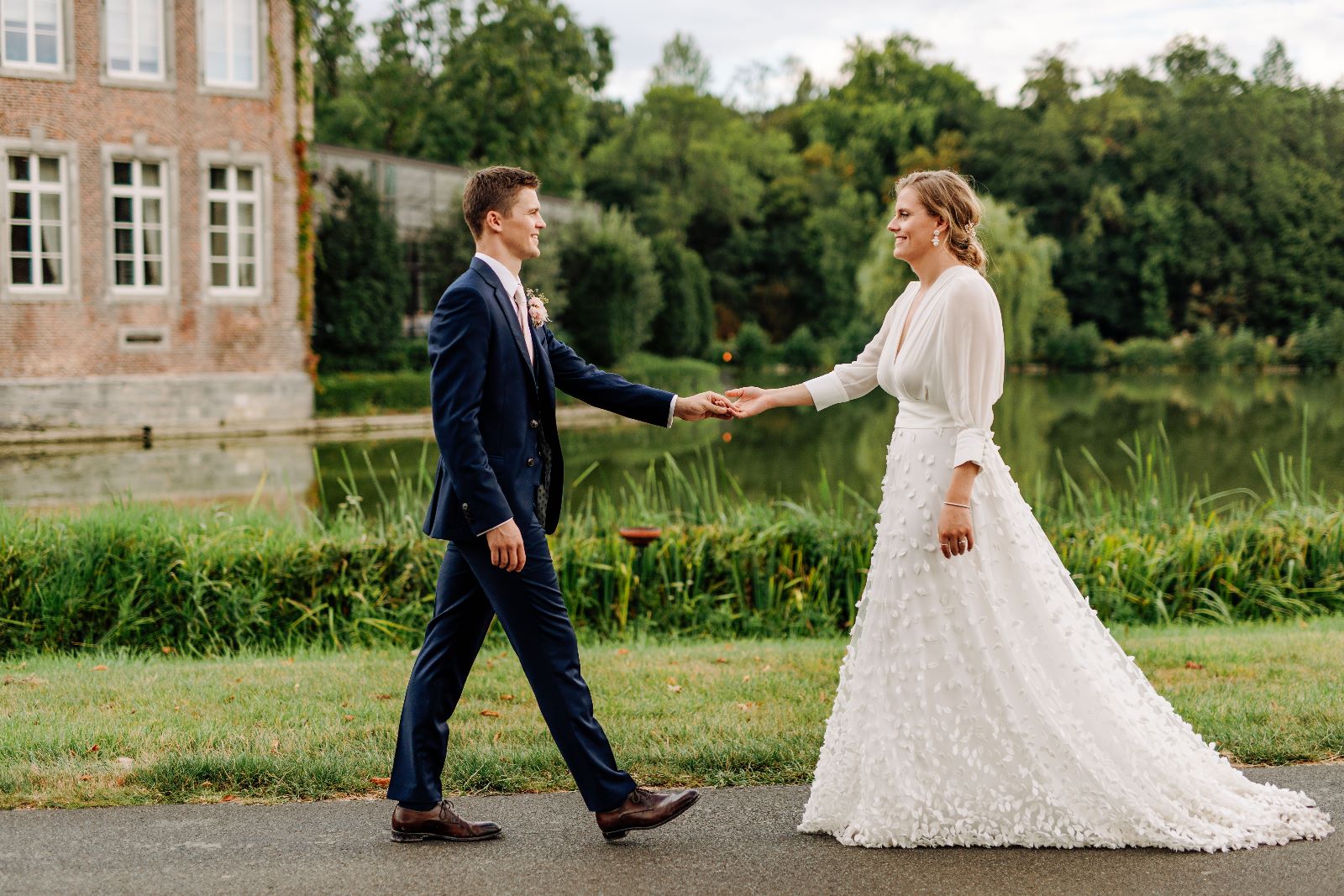
A couple in wedding attire walking hand in hand past a pond and an old brick estate

Our story

The summer that changed everything

A diagnosis rearranges a life in a flash. This is what we learned, and why we decided to turn it into something that can help other families.

A journey

From two people to a foundation

  1. 2013

    Found each other

  2. 2020

    Living together

  3. 2022

    Married

  4. 2024

    Became parents

  5. April 2025

    First symptoms

  6. 13 August 2025

    Diagnosis

  7. 19 August 2025

    Surgery

  8. 2025–2026

    Treatment & rehabilitation

  9. 2026

    Ast'Ro Foundation

  10. October 2026

    Research & hope

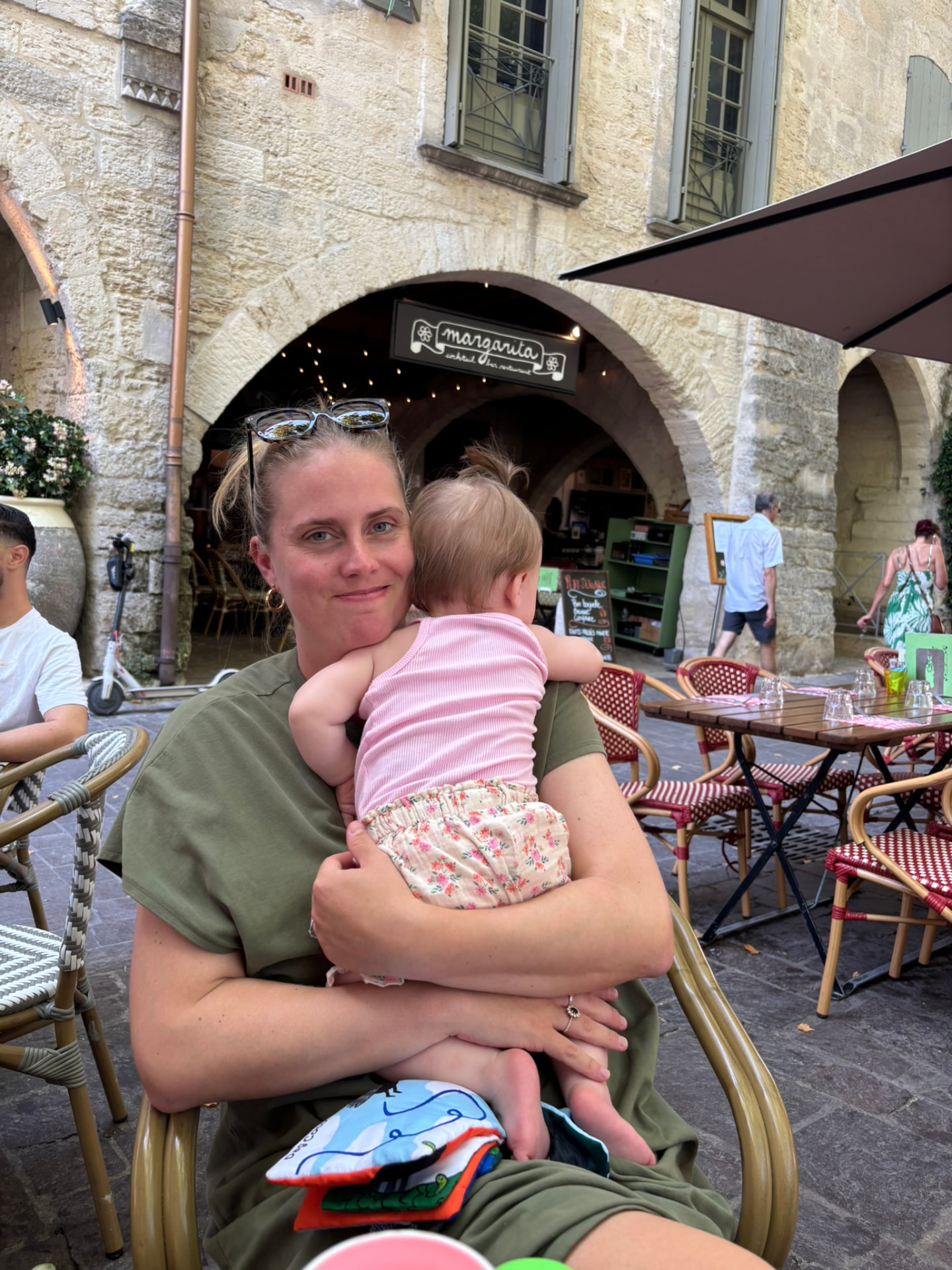
A woman holding a young child on her lap as they sit together at an outdoor café terrace
01

The summer that changed everything

Some stories begin with a plan. Ours began with an ordinary family life filled with love, work, friends and dreams for the future.

Romane and Matthias were building that life together with their young daughter. Like any young family, our days were filled with familiar routines: mornings at home, work, nursery drop-offs, family gatherings, holidays and plans for everything still to come.

Romane was 27 years old. She was a mother, wife, daughter, sister and friend. Warm, spontaneous, social and determined, she had a natural way of bringing people together.

Then, during the summer of 2025, everything changed.
02

When something did not feel right

It began with symptoms that seemed difficult to connect: severe headaches, nausea, vomiting, dizziness and extreme fatigue. Several medical examinations followed. Different explanations were explored, but no clear cause was found.

The symptoms continued.

During a family holiday in the south of France, medication temporarily made Romane feel better. For a short time, we allowed ourselves to believe that the worst might be behind us. But the headaches, dizziness and vomiting returned once she stopped the medication.

As it did not feel right, we travelled home earlier than expected, Romane was ill the entire way back home. The following day, she spent most of her time lying in a dark room, repeatedly vomiting.

We knew something was seriously wrong.

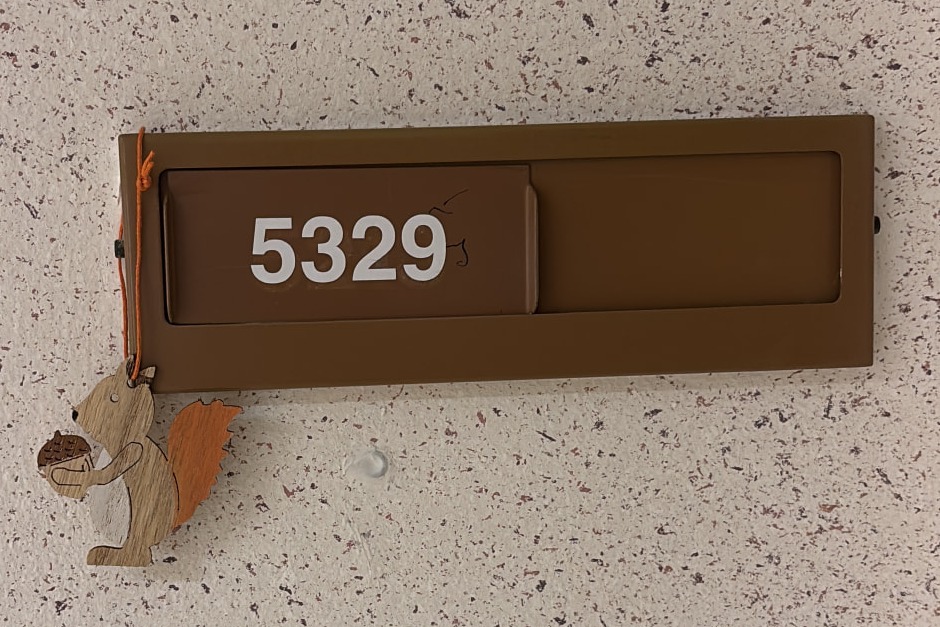
A hospital room number sign with a small wooden squirrel hanging from its edge
03

The day our lives changed

On 13 August 2025, after another medical consultation had provided no explanation, we went to the emergency department at UZ Leuven.

At first, we still believed we would return home that evening. We sat together, made sudoku puzzles, looked at our phones and waited for the results of a CT scan.

Then a neurosurgeon entered the room.

The scan showed a large mass in Romane’s cerebellum. In a single conversation, our ordinary family life was replaced by a world of scans, hospital corridors, medical terminology and overwhelming uncertainty.

On 19 August 2025, Romane underwent major brain surgery. The tumor was removed, but when she woke up, many of the things she had always done without thinking were suddenly no longer possible. Her speech, swallowing, vision, balance and the movement on the right side of her body had been severely affected.

Only days later, she developed postoperative meningitis. Another emergency followed, together with more examinations, antibiotics and isolation.

Yet, even during those darkest days, Romane kept fighting.

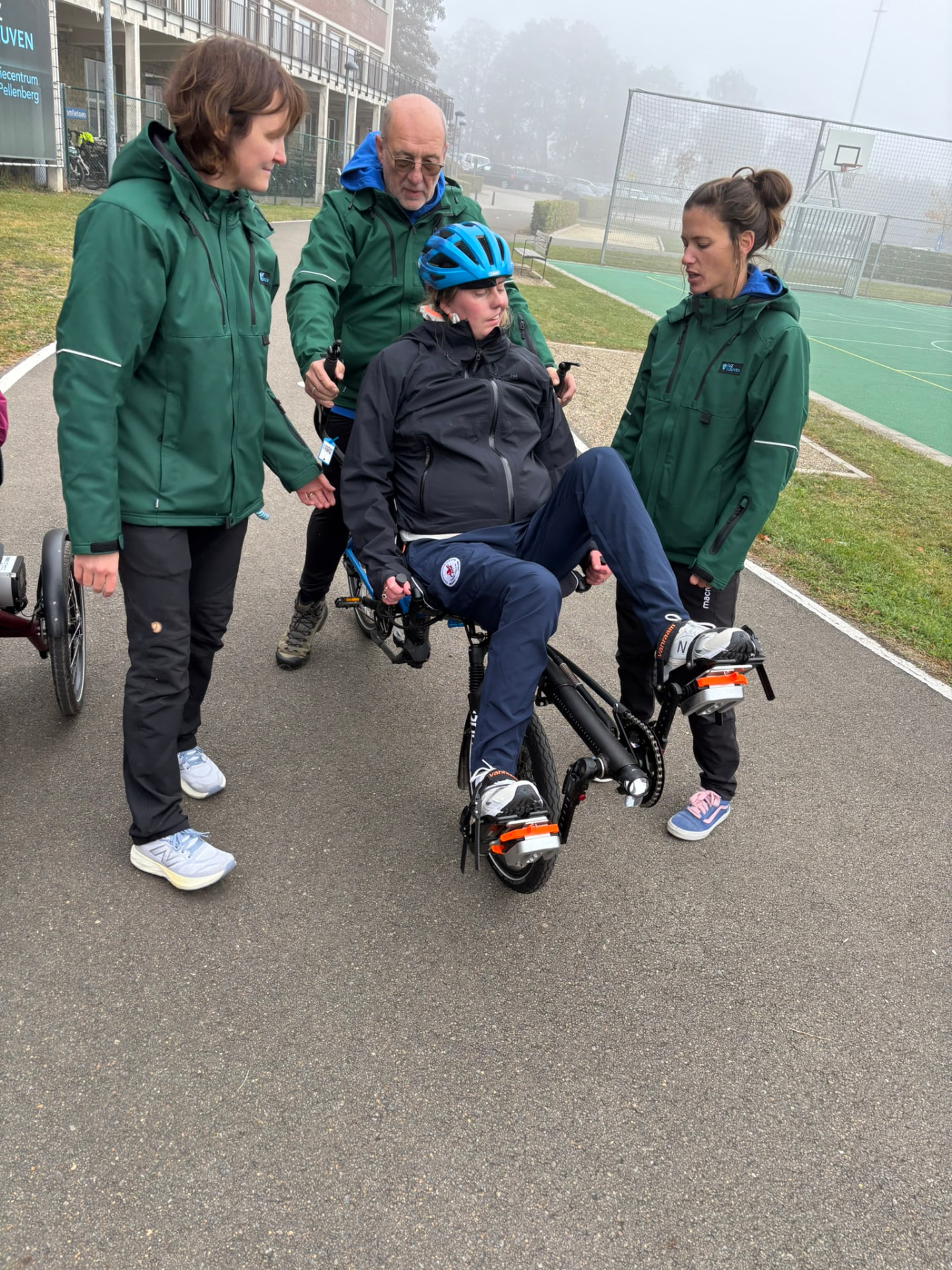
A woman in a blue cycling helmet on an adaptive bike, guided by three carers on an outdoor track
04

Learning everything again

Recovery did not mean returning to life as it had been. It meant learning again what had once been automatic.

Romane had to relearn how to swallow, speak, write, type, eat with a knife and fork, use both hands and take steps. Progress came slowly, through long days of rehabilitation and countless repetitions.

At the same time, we were trying to remain a family. Our daughter was still a baby. While she was discovering the world and learning to say “mama”, her mother was learning again how to walk, speak and care for herself.

Our families and friends surrounded us. They decorated hospital rooms, brought food, cared for our daughter, sent voice messages when reading became too difficult for Romane, drove us to appointments and stayed with us through moments filled with fear.

We discovered that illness never affects only one person. It changes the lives of partners, children, parents, siblings and friends. But we also discovered how strongly people can carry one another when life becomes too heavy to carry alone.

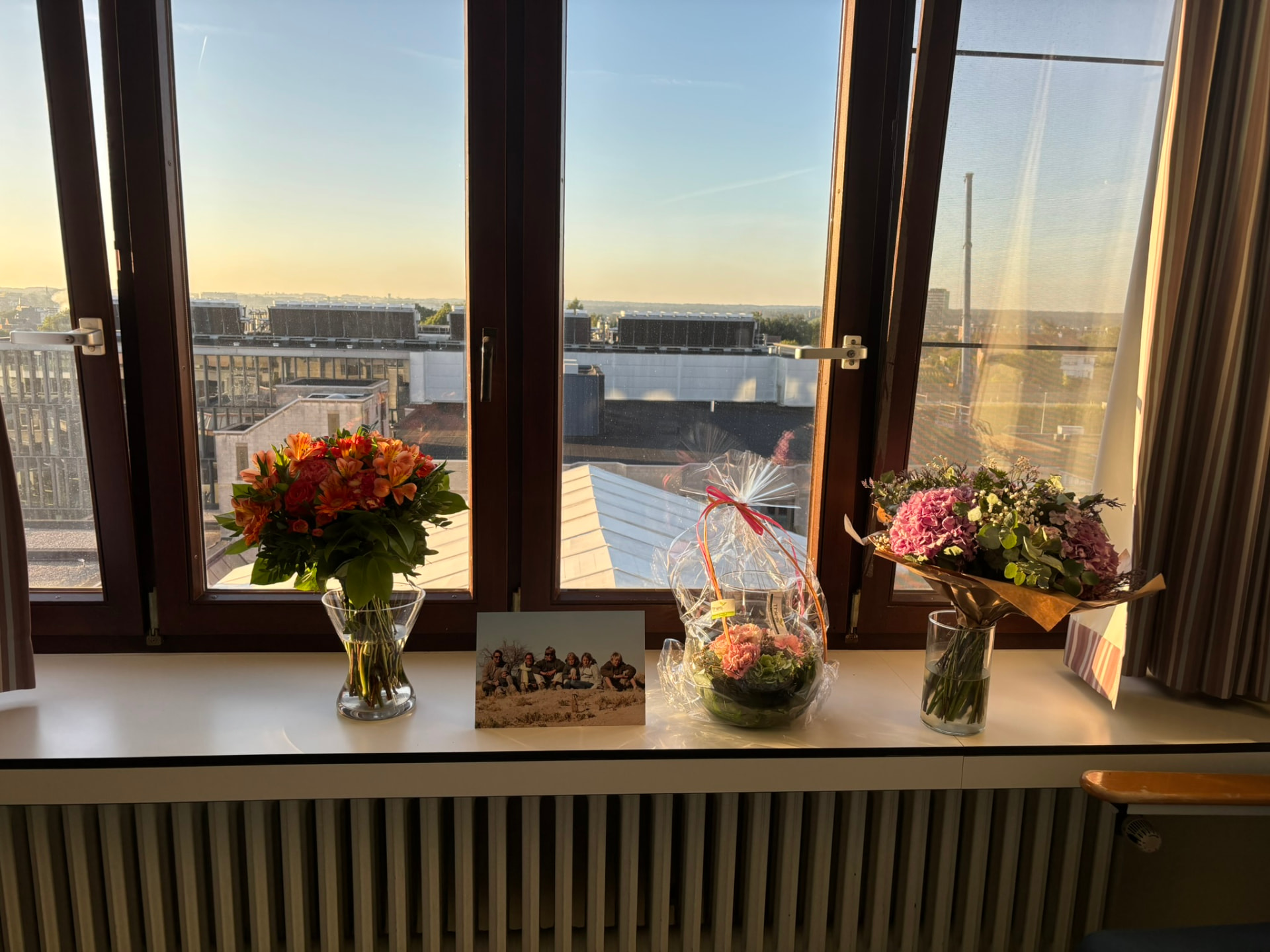
Three bouquets of flowers and a group photograph on a windowsill in front of a window with a view over rooftops
05

A rare and uncertain diagnosis

On 17 September 2025, we received the definitive diagnosis: a high-grade astrocytoma with piloid features, or HGAP.

HGAP is an extremely rare brain tumor. Its rarity means that knowledge is limited, comparisons are difficult and many questions remain unanswered. For families, that uncertainty is almost impossible to describe. Every scan can change everything. Every encouraging result brings relief, but never the certainty that existed before.

After surgery and intensive rehabilitation, Romane underwent another operation, followed by 30 radiotherapy sessions. Because of her claustrophobia, being immobilised under the radiotherapy mask was particularly frightening. Nevertheless, she completed every session.

Chemotherapy followed in January 2026, alongside continuous rehabilitation. The treatment brought fatigue, nausea and more difficulties with balance, but Romane continued to work every day towards greater independence.

Her perseverance can be seen in the smallest moments: typing another word, drinking without assistance, standing a little longer or taking another step. Things that once seemed ordinary became victories.

Our story

What is Romane's illness?

High-grade astrocytoma with piloid features (HGAP): what it is, why it is so rare, and why research into it is so urgent.

Learn more
06

Learning to live between fear and hope

Today, our lives are very different from the lives we knew before. Our days are shaped by treatment, rehabilitation, medical appointments, scans and practical organisation.

But they are also filled with family, laughter, holidays, nursery runs, moments with friends and small victories that mean more than we could ever have imagined.

We have learned that hope is not the absence of fear.

Hope is finding the courage to continue while fear remains. It is getting up after another difficult day. It is celebrating every step forward, however small. It is choosing to believe that research, collaboration and human connection can create a better future.

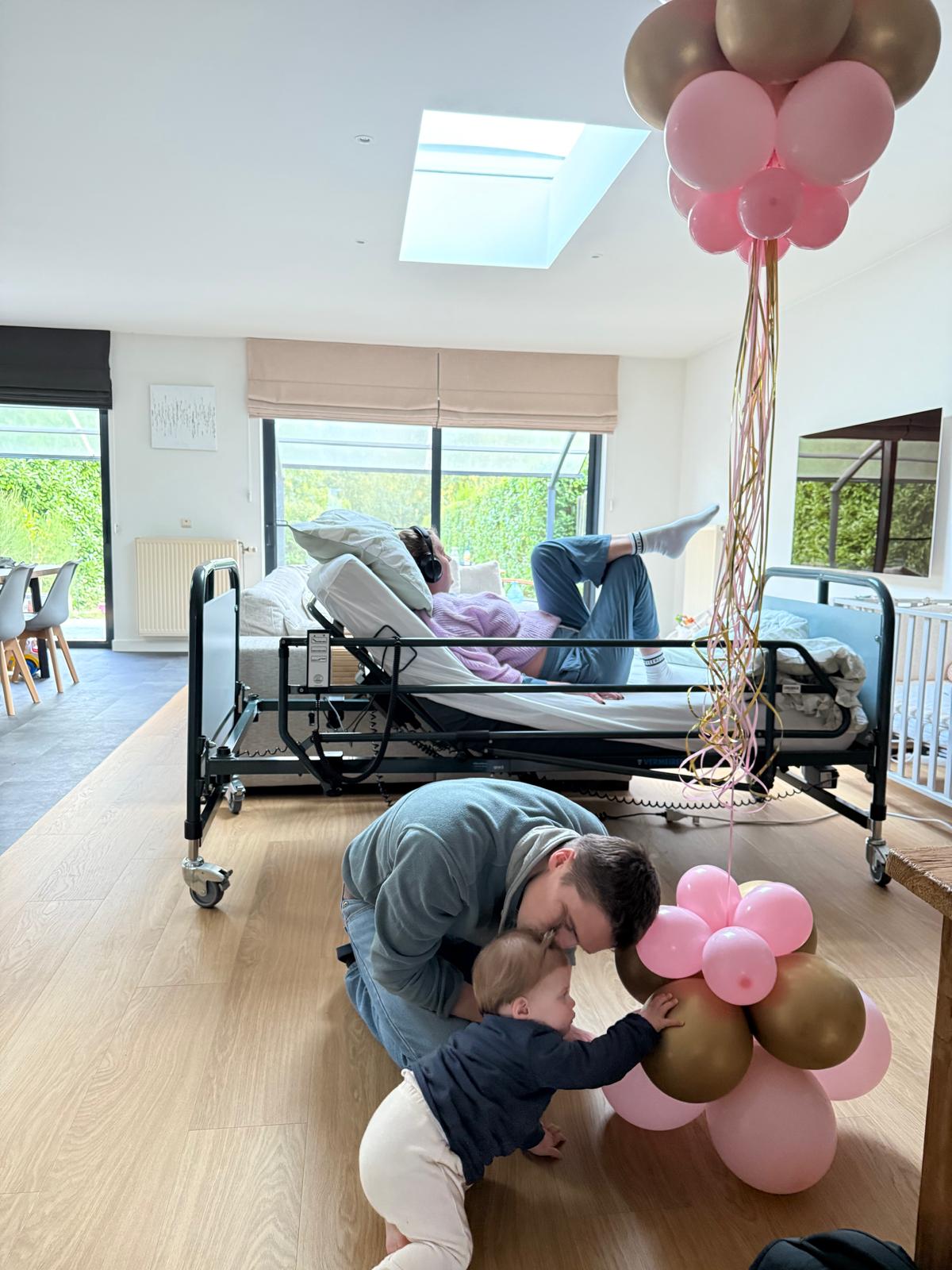
A man crouching beside a toddler playing with pink and gold balloons at home, a woman resting in a care bed in the background
07

Why we created Ast’Ro Foundation

Ast’Ro Foundation grew from everything our family experienced.

The name carries two parts of our story. “Astro” refers to astrocytoma, the tumor that changed our lives, and the stars that became a symbol of hope when everything seemed uncertain. Even in the darkest night, a single star can offer light, perspective and a reason to keep moving forward. “Ro” refers to Romane, the person at the heart of our journey, without allowing her illness to define who she is.

The Foundation is our way of transforming helplessness into action.

We want to help accelerate research into rare brain tumors, connect patients, families, researchers and supporters, and create greater awareness of the human lives behind complex medical diagnoses.

08

Because behind every diagnosis is a person.

A mother. A partner. A daughter. A sister. A friend.

And around that person is a family learning to live with questions no family should have to face alone.

We did not choose this story. But now that it is ours, we want it to lead somewhere. Not only towards sadness, but towards progress. Not only towards awareness, but towards science. Not only towards uncertainty, but towards connection and hope.

Ast’Ro Foundation was born from love: for Romane, for our daughter and for every family that may one day find itself facing the same uncertainty.

Ast’Ro Foundation — Hope Through Science

The name

What Ast'Ro means

ASTRO

Astro comes from astrocytoma — the name of the tumor that changed our lives. It is also a nod to the stars: symbols of light, direction and hope.

RO

The person at the heart of this journey, without letting her illness define who she is.

Hope through science.

Inspired by Romane.

Built for every family.